

Employer Compliance and Advisory
Hiring foreign workers creates ongoing employer obligations after the application is approved. We help employers understand records, wages, duties, working conditions, inspections and changes that may need to be reported.
Do You Need Help Managing Employer Compliance?
If your business hires foreign workers, the responsibility does not end when a work permit is approved. You may need to maintain records, respect the job offer terms, respond to inspection requests, and understand what changes must be handled carefully.
This service is for employers who want structure, clarity, and risk awareness when managing LMIA-based or LMIA-exempt foreign worker files.
Common reasons clients ask for help
- You employ foreign workers and want to understand ongoing duties.
- You need help organizing payroll, job-duty, location, or contract records.
- You are preparing for or responding to a compliance review.
- You want advice before changing wages, duties, hours, or work location.
Employers hiring foreign workers
This service is for HR teams, business owners and employers using the Temporary Foreign Worker Program, International Mobility Program, LMIA-based hiring or LMIA-exempt work permits.
Last reviewed
May 26, 2026. Immigration rules, fees and processing times can change. We verify current government instructions before preparing an application.
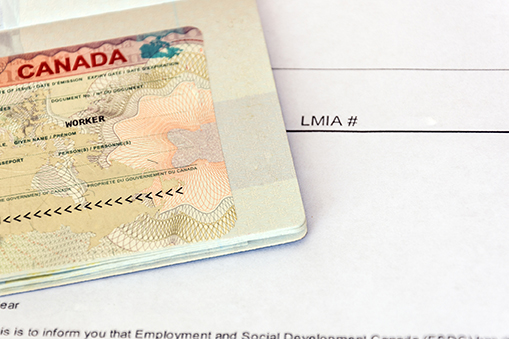
Compliance Continues After Approval
Government compliance rules require employers to meet the terms of the LMIA, offer of employment, work permit and applicable employment laws. Employers may be inspected and must be able to prove compliance.
For IMP employers, IRCC lists responsibilities such as checking the work permit, meeting the offer terms, keeping the workplace abuse-free, maintaining required insurance and being ready for inspections. For TFWP employers, ESDC can inspect records and impose penalties for non-compliance.
Who is eligible for employer compliance?
Eligibility depends on your facts, the exact stream, current government rules and the documents available at the time you apply. Common factors include:
- You currently employ or plan to employ a foreign worker.
- You have LMIA, Employer Portal, job offer or work permit conditions to follow.
- You need to document wages, duties, location, hours and working conditions.
- You may need advice before changing a job, wage, location or employer structure.
- You want to prepare for possible inspection or voluntary disclosure.
- You need a compliance process that matches current government rules.
What documents do you need for employer compliance?
This is a practical starting list, not a complete document checklist. The final list depends on your program, country of residence, family members and government instructions.
- LMIA decision letters, annexes and employment contracts.
- Employer Portal offer records and offer numbers.
- Payroll, timesheets, job descriptions and work location records.
- Proof of insurance, workers' compensation and workplace policies.
- Records of changes to duties, wages, hours or location.
- Inspection correspondence and voluntary disclosure records if applicable.
How a licensed RCIC helps with employer compliance
- Review your eligibility and compare available pathways before you apply.
- Organize evidence, forms and timelines so the application tells a clear story.
- Prepare submission packages and representative portal steps where authorized.
- Identify gaps, inconsistencies, expired documents and avoidable refusal risks.
- Explain government requests and next steps in plain language.
What goes wrong with employer compliance applications?
Careful preparation matters because small errors can slow down a file or weaken credibility.
Wrong pathway
Choosing a stream before checking all criteria can lead to wasted time, missed deadlines or a weak application.
Inconsistent details
Dates, job titles, addresses and family information should match across forms, letters and supporting evidence.
Missing evidence
A file can be refused or delayed when important proof is missing, unclear, expired or not translated properly.
Late responses
Government document requests usually have deadlines. Missing them can create serious problems for the application.
Why RA Migration
Employer compliance requires more than filing the initial application. RA Migration understands that employers must keep the job offer, wage, duties, work location, records, and workplace conditions aligned with the immigration pathway used to hire the worker.
We help employers review obligations, organize records, identify possible gaps, and prepare clearer responses where government questions arise. We also help businesses understand when a change may require a new step before it creates a compliance issue.
If your organization hires foreign workers, RA Migration can help you manage the process with better structure, accuracy, and confidence.
What we focus on
- Employer obligation review
- Record and evidence organization
- Inspection response preparation
- Change-management guidance
Frequently Asked Questions
They are the conditions employers must meet after hiring a foreign worker, including wages, duties, working conditions, records and workplace protections.
Government pages refer to keeping relevant records for six years in several temporary foreign worker compliance contexts.
Yes. Inspections may be triggered by suspicion, prior non-compliance, random selection or other listed reasons.
Consequences can include warnings, monetary penalties, bans, publication on government lists and impacts on future applications.
Yes. LMIA-exempt employers using the IMP still have responsibilities tied to the offer and worker conditions.
We can help organize records, review obligations and prepare clear responses, but outcomes depend on the facts and government assessment.
Immigration help across Ontario & Quebec
RA Migration serves clients across Ontario and Quebec, online and in person from our Burlington office, with Arabic-speaking service.
Toronto
Immigration consultant in Toronto, Ontario.
Mississauga
Immigration consultant in Mississauga, Ontario.
Ottawa
Immigration consultant in Ottawa, Ontario.
Hamilton
Immigration consultant in Hamilton, Ontario.
London
Immigration consultant in London, Ontario.
Montréal
Immigration consultant in Montréal, Quebec.
Laval
Immigration consultant in Laval, Quebec.
All areas we serve
Every community we serve across Ontario & Quebec.