

Temporary Resident Services
Whether you're visiting family, attending business meetings, or working in Canada, RA Migration provides expert assistance for all temporary resident applications.
Do You Need Temporary Status in Canada?
Temporary residence can include visiting, studying, working, extending status, or changing conditions. You may be trying to choose between a visitor visa, visitor record, study permit, work permit, Super Visa, or extension.
This service is for people who need help choosing the right temporary pathway and preparing a clear application before submitting to IRCC.
Common reasons clients ask for help
- You want to visit, study, work, or extend your stay in Canada.
- You are unsure which temporary application fits your situation.
- Your documents, purpose, finances, or ties need to be organized.
- You want guidance before status deadlines or travel plans become urgent.
Super Visa for Parents & Grandparents
At RA Migration, we understand the importance of keeping families together. The Super Visa allows parents and grandparents of Canadian citizens, permanent residents, or registered Indians to visit Canada for extended periods, up to 5 years at a time, under the current rules.
Requirements
- Invitation letter from your child or grandchild in Canada, with proof of status and a promise of financial support
- Medical examination from an IRCC-approved physician
- Proof of private medical insurance with at least $100,000 in emergency coverage that is valid for at least 1 year from entry
- Your host in Canada must meet the current minimum necessary income requirement for their family size

Visitor Visa (Temporary Resident Visa)
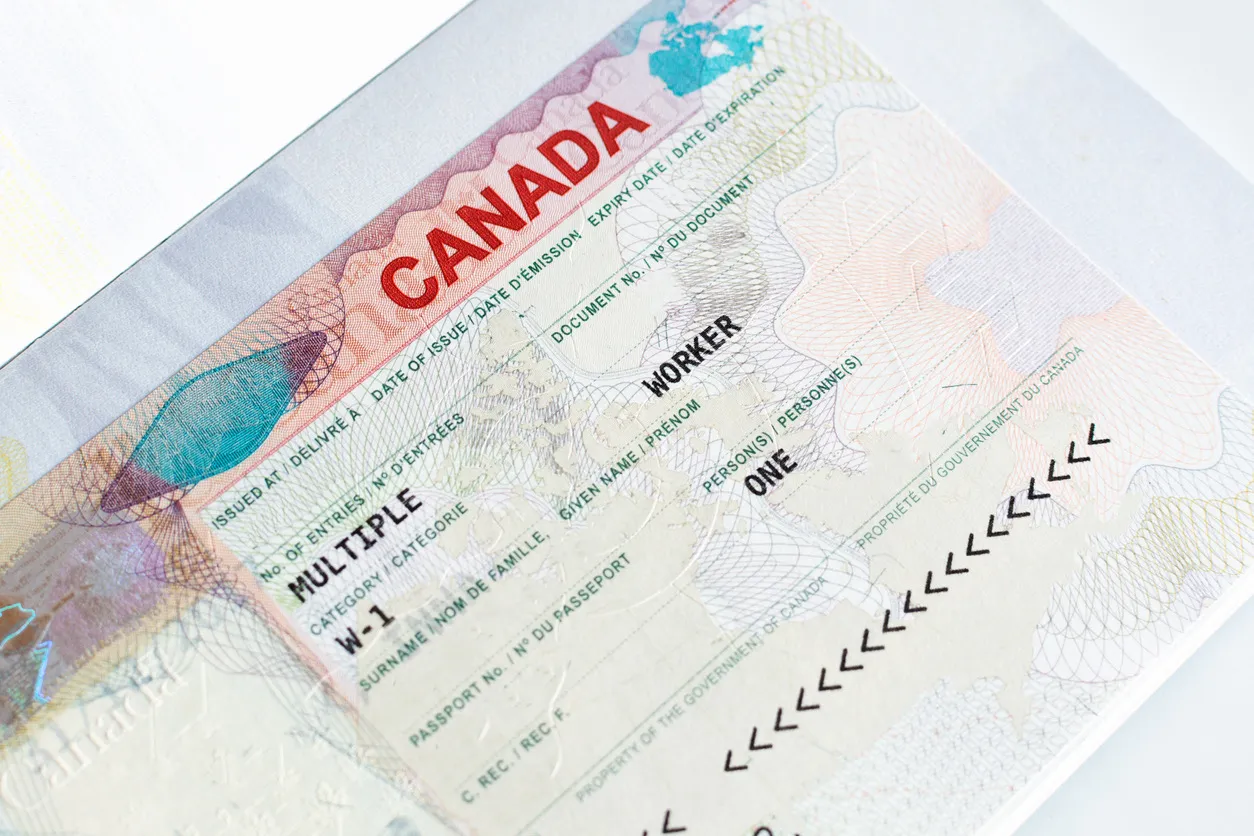
A visitor visa, also called a Temporary Resident Visa (TRV), may be required for you to travel to Canada for tourism, family visits, or business travel. It is the document placed in your passport showing that you meet the requirements to travel to Canada.
The visa itself is not the same as your authorized length of stay in Canada. Most visitors are allowed to stay for up to 6 months unless a border services officer gives you a different date.
Key Success Factors
- Meeting the eligibility requirements, including having a valid passport, being in good health, and having enough money for your stay
- Providing complete and accurate information with no missing forms or supporting documents
- Demonstrating the purpose of your visit with clear evidence such as travel plans, invitation letters, or conference documents
- Showing sufficient financial support through bank statements, employment documents, or sponsor evidence
- Strong ties outside Canada demonstrating that you will leave at the end of your authorized stay

Work Permit
A work permit is the document that authorizes you to work in Canada temporarily. Whether you need an open work permit or an employer-specific permit, we help you choose the right category and prepare a complete application.
Open Work Permits
Open work permits let you work for almost any employer in Canada. They are available only in specific situations, such as certain spouses, some graduates, sponsored spouses in Canada, and some refugee or humanitarian cases.
Employer-Specific Permits
Employer-specific permits are tied to a named employer, job, location, and duration. They are commonly based on a valid job offer and, in many cases, a positive LMIA or another exemption code.
Examples of Work Permit-Exempt Activities
Some temporary workers may be exempt from needing a work permit, depending on the exact activity and duration. Common examples include:
- Business visitors conducting international business activities
- Some news reporters and media crews
- Certain performing artists, athletes, coaches, and event staff
- Some clergy and religious workers
Why RA Migration
Temporary resident applications must match the purpose of the stay and the applicant’s circumstances. RA Migration helps clients understand which temporary status category fits and what evidence should support it.
We help organize forms, financial documents, travel purpose, school or job documents, family information, and extension timelines. Our goal is to reduce confusion and help clients prepare complete, consistent applications.
If you need temporary status in Canada, RA Migration can help you choose the right next step and prepare it carefully.
What we focus on
- Temporary pathway selection
- Purpose and document review
- Extension and status timing
- Application consistency
Frequently Asked Questions
It follows from what you intend to do. Visiting means a visitor visa or eTA; a parent or grandparent visiting long term means a Super Visa; working means a work permit; studying for more than six months means a study permit.
The categories are not interchangeable, and entering as a visitor with the intention of switching later is not a reliable plan, since eligibility to apply from inside Canada is limited. Choosing the right category at the outset avoids the much harder problem of correcting it afterwards.
You can have applications in progress, but you hold one status at a time, and applications in different categories can work against each other.
An officer assessing a visitor application weighs whether you will leave at the end of your stay. A simultaneous application signalling an intention to remain can complicate that, though dual intent, holding both a temporary purpose and a genuine permanent residence goal, is recognized in Canadian law and is not by itself a reason for refusal. What matters is that your temporary intentions are genuine and evidenced.
It means you may hold a genuine intention to visit, work or study temporarily while also pursuing permanent residence, and Canadian law expressly permits this.
The officer still has to be satisfied you will comply with the terms of the temporary status, including leaving if the permanent application is refused or not yet decided. Concealing a permanent residence application is far more damaging than disclosing it, because non-disclosure raises misrepresentation, which is a much more serious problem than dual intent ever was.
Well before your planned travel, and earlier than published processing times suggest, since those are averages rather than commitments.
Processing varies significantly by visa office, application type and time of year, and biometrics and medical examinations add time before processing even begins. Booking non-refundable travel before a decision is a common and expensive mistake. Check the current processing time for your specific country and category rather than a general figure.
You are out of status, must stop any work or study, and can face enforcement action.
Restoration may be available within 90 days of losing status, but it is discretionary and does not authorize work or study while pending. Beyond that window the options narrow considerably. Time spent out of status has to be disclosed in later applications and weighs against you, so the priority is to act within the 90 days rather than wait.
Often yes, and for many people it is the intended route. Skilled work experience gained in Canada supports the Canadian Experience Class and improves an Express Entry ranking, and several provincial streams target workers and graduates already in the province.
What makes it work is maintaining valid status without gaps, because qualifying work experience generally must be performed under authorization. Planning the permanent step while your temporary status is still comfortably valid produces far more options than starting once it is close to expiry.
Immigration help across Ontario & Quebec
RA Migration serves clients across Ontario and Quebec, online and in person from our Burlington office, with Arabic-speaking service.
Toronto
Immigration consultant in Toronto, Ontario.
Mississauga
Immigration consultant in Mississauga, Ontario.
Ottawa
Immigration consultant in Ottawa, Ontario.
Hamilton
Immigration consultant in Hamilton, Ontario.
London
Immigration consultant in London, Ontario.
Montréal
Immigration consultant in Montréal, Quebec.
Laval
Immigration consultant in Laval, Quebec.
All areas we serve
Every community we serve across Ontario & Quebec.
Common Super Visa questions, answered in detail
Each of these has its own page with the specifics, the evidence required, and the mistakes that cause refusals.
Processing Time
How long does a Super Visa take to process?
Income Requirements
What income do I need to show for a Super Visa?
Medical Insurance
What medical insurance is required for a Super Visa?
Document Checklist
What documents are needed for a Super Visa application?
Invitation Letter
What should a Super Visa invitation letter include?
Cost & Fees
How much does a Super Visa cost?