Canada offers refugee protection to people who face persecution, torture, a risk to life, or cruel and unusual treatment or punishment. We help clients understand whether they may be eligible to claim asylum from inside Canada or pursue protection from outside Canada through a resettlement pathway.
If you are afraid to return to your country, the refugee process can feel overwhelming and deeply personal. You may need to explain your fear, organize evidence, understand forms and deadlines, and prepare for questions about your story and documents.
This service is for people who need careful, respectful guidance before or during a refugee claim process.
Canada offers refugee protection to people who face persecution, torture, a risk to life, or cruel and unusual treatment or punishment. We help clients understand whether they may be eligible to claim asylum from inside Canada or pursue protection from outside Canada through a resettlement pathway.
You may qualify for refugee protection in Canada if you fear returning to your country because of:
You can make a claim at a port of entry or, if you are already in Canada, through the IRCC refugee portal process. IRCC or CBSA first decides whether your claim is eligible to be referred to the Refugee Protection Division (RPD).
You will appear before a member of the Refugee Protection Division (RPD). This is a formal hearing where you present your case and evidence. We prepare you thoroughly and represent you at the hearing.
If accepted, you become a protected person and can apply for permanent residence. If refused, you may have access to the Refugee Appeal Division or other post-decision remedies depending on the circumstances.
For applicants outside Canada, resettlement may be possible through government-assisted or privately sponsored refugee programs. In many cases, overseas refugees must be referred by UNHCR, a designated referral organization, or a private sponsor.
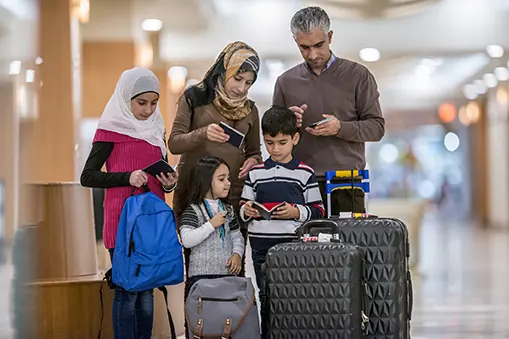
Refugee files require careful attention to personal history, credibility, identity documents, country conditions, timelines, and consistency. RA Migration understands that clients need both technical guidance and respectful communication in these matters.
We help organize documents, explain process steps, identify gaps, and prepare the file in a way that is clear and honest. We do not promise protection or outcomes, but we help clients prepare seriously and carefully.
If you need support with a refugee matter, RA Migration can help you understand the process and prepare with care.
A person who faces persecution based on race, religion, nationality, political opinion or membership in a particular social group, or who faces a risk of torture, a risk to life, or cruel and unusual treatment or punishment.
Membership in a particular social group covers claims based on gender, sexual orientation and gender identity, among others. Eligibility to have a claim heard is a separate question from whether the claim succeeds, and certain circumstances, including prior claims or the Safe Third Country Agreement, can make a claim ineligible for referral to the Immigration and Refugee Board.
A claim is made either at a port of entry or from inside Canada, screened for eligibility, then referred to the Refugee Protection Division of the Immigration and Refugee Board for a hearing.
The Basis of Claim form, which sets out your account in detail, is central and is subject to a short filing deadline. At the hearing a member assesses credibility and the risk you face. Successful claimants become protected persons and can then apply for permanent residence. Refused claimants may have access to an appeal or to judicial review depending on the circumstances.
It is the written account of who you are, what happened to you and what you fear, and it becomes the reference point against which your testimony is measured.
Inconsistencies between the form and later evidence are the most common reason claims fail on credibility, even where the underlying fear is genuine. It must be complete and accurate from the outset, because material added later invites the question of why it was omitted. The filing deadline is short, which is why claimants benefit from help early rather than after it is submitted.
Claimants can generally apply for a work permit once their claim has been referred and they have completed the required medical examination.
Access to provincial healthcare varies, though the Interim Federal Health Program provides coverage to claimants. Minor children may attend school. These entitlements follow from having a claim in process, and they end if the claim is finally refused, so they should not be treated as settled status.
A refugee claim is made by someone already in Canada or at its border. Resettlement applies to people outside Canada who are referred or sponsored from abroad.
Resettlement runs through two main streams: government-assisted refugees, referred by the UNHCR or another designated organization, and privately sponsored refugees, supported by sponsorship agreement holders, groups of five or community sponsors. You cannot apply to be resettled by approaching Canada directly, which is a frequent point of confusion for families trying to help relatives abroad.
Depending on your circumstances, you may be able to appeal to the Refugee Appeal Division, or seek judicial review at the Federal Court where an appeal is not available.
Deadlines are short and access to the Refugee Appeal Division is restricted for certain categories of claimant. A Pre-Removal Risk Assessment may be available later where circumstances have changed. Because each of these has its own timeline and eligibility rules, a refusal should be reviewed immediately rather than after the removal process has begun.
RA Migration serves clients across Ontario and Quebec, online and in person from our Burlington office, with Arabic-speaking service.
Immigration consultant in Toronto, Ontario.
Immigration consultant in Mississauga, Ontario.
Immigration consultant in Ottawa, Ontario.
Immigration consultant in Hamilton, Ontario.
Immigration consultant in London, Ontario.
Immigration consultant in Montréal, Quebec.
Immigration consultant in Laval, Quebec.
Every community we serve across Ontario & Quebec.