Already living or working in Canada? We help you maintain, extend, and upgrade your immigration status, from work permit renewals to citizenship applications.
If you are already in Canada, your next immigration step may depend on timing. You may need to extend status, restore status, renew a PR card, apply for citizenship, update documents, or deal with a complicated in-Canada issue.
This service is for people who want clear guidance before a deadline, status gap, document expiry, or application mistake creates avoidable stress.
If you are already in Canada, timely filing and the right application type can make the difference between staying in status and falling out of status. RA Migration helps with extensions, restorations, permanent resident documents, citizenship, and travel document issues from inside and outside Canada.
If you are working in Canada and want to keep working, you must apply to extend your work permit before it expires. Applying on time may allow you to keep working under maintained status while IRCC processes the extension.


Open work permit rules for spouses and common-law partners changed in 2025. Depending on your partner's status in Canada, you may still qualify for an open work permit that allows you to work for almost any employer in Canada.
Separate open work permit rules also exist for spouses or partners being sponsored for permanent residence from inside Canada. We assess which stream applies before we file.
If you are in Canada as a visitor and want to stay longer, you can apply for a visitor record. Most visitors are authorized to stay for 6 months unless another date is written in their passport, visitor record, study permit, or work permit.


If your visitor, worker, or student status expired before you applied to extend or change it, you may still be able to apply for restoration of status within 90 days of the expiry date.
The 90-day restoration window closes quickly. If you have lost your status, contact us right away. Every day matters, and a skilled consultant can assess your options and file a complete, persuasive restoration application as quickly as possible.
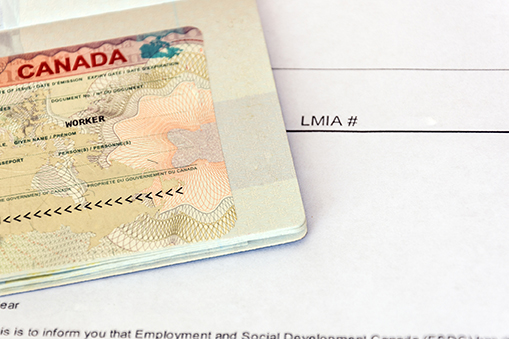
Most employers in Canada must obtain a positive Labour Market Impact Assessment (LMIA) from Employment and Social Development Canada (ESDC) before hiring a foreign national. A positive LMIA confirms that there is a need for a foreign worker and that no Canadian citizen or permanent resident is available to fill the position.
For positions where the offered wage is at or above the provincial/territorial median hourly wage. Employer must provide a transition plan showing efforts to reduce reliance on TFWs over time.
For positions where the offered wage is below the provincial/territorial median hourly wage. Subject to cap limits in certain sectors. Employer must pay transportation, housing, and health insurance costs.
For primary agricultural employers hiring seasonal or year-round workers for specific agricultural activities.
Faster LMIA processing (10 business days) for highly skilled positions in specific in-demand occupations through designated referral partners.
Employers with a positive LMIA are subject to ESDC compliance inspections. We help employers understand and meet their obligations to avoid penalties, bans, or loss of LMIA privileges.

Your Permanent Resident card proves your PR status and is the document most permanent residents need to return to Canada by commercial transportation after travel. If your card is expiring, lost, or damaged, renewal or replacement should be handled early.
To renew your PR card, you must meet the residency obligation: you must have been physically present in Canada for at least 730 days (2 years) out of the last 5 years. Trips outside Canada, unless on an exemption such as traveling with a Canadian citizen spouse or working for a Canadian company abroad, count against your residency requirement.
You can apply to renew your PR card before it expires. Do not wait until travel is booked, especially if you may need to return to Canada by airplane, boat, train, or bus.
Canadian citizenship is often the final step of the immigration journey. It gives you the right to vote, apply for a Canadian passport, and participate fully in civic life as a Canadian citizen.
Time spent in Canada as a temporary resident or protected person before becoming a PR counts at half the rate (1 day = 0.5 days) toward the 1,095-day requirement, up to a maximum of 365 days.
Minor children can apply as permanent residents through the citizenship process, but the rules differ from adult grants. We help families choose the right route and prepare supporting documents correctly.


Travel document needs depend on whether you are a Canadian citizen, a permanent resident, a protected person, or a stateless permanent resident. We help clients identify the correct document before they travel or submit an application.
If you are outside Canada without a valid PR card, you may need a Permanent Resident Travel Document to return to Canada by airplane, bus, boat, or train. A PRTD is usually valid for one entry.
Protected persons in Canada, including Convention refugees and persons in need of protection, may be eligible for a refugee travel document. It cannot be used to travel to the holder's country of citizenship.
Permanent residents in Canada who are stateless or cannot obtain a national passport or travel document for a valid reason may be eligible for a certificate of identity.
Canadian citizens can apply for a new passport or renew an adult passport if they qualify. We help organize the application package, photos, guarantor details, and supporting documents before submission.
In-Canada immigration files often turn on timing, eligibility, and consistency. RA Migration helps clients understand what must be filed, when it should be filed, and what documents support the application.
We help review status history, organize forms and evidence, identify gaps, and explain next steps clearly. Whether the matter involves a visitor record, work permit, study permit, PR card, citizenship, or restoration, preparation matters.
If you are trying to stay organized while already in Canada, RA Migration can help you protect your next step with careful planning.
Apply to extend before the expiry date. That single step preserves maintained status and keeps every other option open.
A timely application lets you remain in Canada under your existing conditions while IRCC decides, including continuing to work or study if your current status authorized it. Once the date passes, that protection is gone and you are in restoration territory, on a 90-day clock, with no authorization to work or study while it is pending.
An extension continues the status you already hold and must be filed before expiry. Restoration is the remedy after status has already lapsed. A change of status moves you to a different category, such as visitor to student.
The distinction determines what you are entitled to do while waiting. Only a timely extension or change gives maintained status. Restoration gives nothing while pending and is granted at IRCC’s discretion. Establishing which of the three applies is the first thing to settle, because the deadlines differ.
You need to meet the residency obligation of 730 days of physical presence in Canada within the preceding five years, and be able to document it.
Certain time abroad can count, including days accompanying a Canadian citizen spouse or partner, or working full time for a Canadian business. If you are outside Canada without a valid PR card, you would need a permanent resident travel document to return, and that application is where a shortfall in the residency obligation typically surfaces.
Yes, through several routes: Express Entry, provincial nominee streams, inland spousal sponsorship, and humanitarian and compassionate applications among them.
Applying from inside Canada often brings practical advantages, including open work permit eligibility for inland spousal applicants. Maintaining valid temporary status throughout matters, because a lapse can interrupt the qualifying work experience that several of these pathways depend on.
Skilled work experience gained in Canada under valid authorization counts toward the Canadian Experience Class and adds to an Express Entry ranking. Study time does not count as work experience, though it contributes to your education points.
The condition is that the work was authorized. Work performed while out of status generally does not count, which is how a lapsed permit can quietly cost months of qualifying experience even after status is restored.
Only if you hold an open work permit. An employer-specific permit ties you to the employer, position and location named on it.
Changing employers on an employer-specific permit requires a new work permit application, and usually a new LMIA or an exemption. Starting the new job before approval is unauthorized work, even with an application pending. A vulnerable worker open work permit exists for people experiencing abuse in the workplace, which is a separate and faster route.
RA Migration serves clients across Ontario and Quebec, online and in person from our Burlington office, with Arabic-speaking service.
Immigration consultant in Toronto, Ontario.
Immigration consultant in Mississauga, Ontario.
Immigration consultant in Ottawa, Ontario.
Immigration consultant in Hamilton, Ontario.
Immigration consultant in London, Ontario.
Immigration consultant in Montréal, Quebec.
Immigration consultant in Laval, Quebec.
Every community we serve across Ontario & Quebec.